

Story Index
Chapter 01 · The Problem
Great decorators deserve great production partners.
Every decoration business depends on consistency. When transfer quality
varies, deadlines slip, or support falls short, the decorator absorbs the
consequences.
Decorators deserve a production partner
they can depend on.
Chapter 02 · Where It Began
A small operation built on a clear belief.
Apex started as Apex Embroidery — founded by Brian and Sandy Hill on the
conviction that decorators deserved suppliers who treated them like partners, not transactions.
Decorators deserve a production partner
they can depend on.
Archive 02 · Apex Embroidery · Brian & Sandy Hill
Chapter 03 · The Evolution
From legacy to next chapter.
Never rebranded. Never acquired. Same family, steadily adding what decorators asked for — and investing in the equipment to do it properly.
Era 01 · Founding
The Apex Embroidery Years
1998 – 2003 · Foundation
Where It Started
Brian Hill started Apex in February 1998 — alone, providing embroidery digitizing services. No staff, no production floor. Just converting designs into files an embroidery machine could stitch.
In fall 1999, Sandy Hill joined and Apex added applique cutting as a second service. For four years it stayed a two-person operation, building customer relationships by being the supplier that actually picked up the phone. The first non-family employee was hired in 2003.
Feb 1998
Apex Founded
Fall 1999
Sandy Joins. Applique Cutting Added.
2003
First Employee
2009 – 2016 · Becoming A Transfer Manufacturer
From Digitizing Shop to Production Floor
Decorators kept asking for more. In 2009 Apex added vinyl transfers and wholesale material sales — the first step toward becoming a full transfer manufacturer. In 2011, Apex acquired Starbird specifically to free Brian’s time to focus on growing the business rather than running daily operations.
What followed was a run of new products: rhinestone transfers in 2014, screen-printed transfers developed the same year and launched in 2015, and Ultra Ink in 2016. Ultra Ink — a hybrid digital and screen-print heat transfer — was a process Apex was the first company in the US to develop. It remains one of the most distinctive products in the line.
2009
Vinyl Transfers & Wholesale Materials
2011
Acquired Starbird
2014
Rhinestone Transfers Added
2014 – 2015
Screen-Printed Transfers Developed & Launched
2015
First in Minnesota — Direct-to-Screen Imaging
2016
Ultra Ink Launched — First in the US
2017 – 2022 · First in North America
Four Press Lines, Built Before They Were Needed
Apex moved into its current building in July 2017 — the same month it installed its first automatic screen press. That press made Apex the first company in North America to install an automatic press for screen-printed transfers. The decision wasn’t reactive; Apex invested in the equipment before the volume demanded it.
What followed was six years of deliberate infrastructure building: four press lines, two laser imaging systems, automatic screen developing and reclaiming, water recycling systems, and an 11,000 sq ft building addition in 2022 — again, built for future growth rather than in response to current capacity pressure.
Apex moved into its current building in July 2017 — the same month it installed its first automatic screen press. Apex became the first company in North America to implement this specific automatic press system for screen-printed transfer production. The decision wasn’t reactive; Apex invested in the equipment before the volume demanded it.
What followed was six years of deliberate infrastructure building: four press lines, two laser imaging systems, automatic screen developing and reclaiming, water recycling systems, and an 11,000 sq ft building addition in 2022 — again, built for future growth rather than in response to current capacity pressure.
Jul 2017
Moved Into New Building
2017
First Automatic Screen Press — First in North America
2018
Second Press Line + Systems
2018
Sales Manager Hired
2019
Third Press Line
2020
Switched to Laser Direct-to-Screen Imaging — First in Minnesota
2021
Fourth Press Line
2022
11,000 Sq Ft Building Addition
2023 – 2024 · The DTF Era
The Newest Product Line — Same Pattern
In March 2023, Apex added DTF transfers to the product line — the same pattern as every product before it: decorators were asking for it, Apex built the capability to do it properly. The longtime sales manager retired the same month; Apex hired its first dedicated marketing manager as part of that transition.
By 2024, Apex had added three DTF imaging systems to meet demand. After 26 years and a product line Brian and Sandy couldn’t have imagined when Brian started alone in 1998, the company was in the strongest position it had ever been in.
Mar 2023
DTF Transfers Added
2024
Three DTF Imaging Systems
December 2025 · The Next Chapter
Paisley Capital Acquires Apex. John Meyer Named CEO.
On December 1, 2025, Apex Embroidery Design, Inc. was acquired by Paisley Capital — a private investment firm focused on acquiring and building lower middle market companies with strong competitive positions and long-term growth potential. True North Mergers & Acquisitions served as exclusive financial advisor to Apex through the process.
Paisley Capital appointed John Meyer as Chief Executive Officer. Brian and Sandy Hill, who built Apex over 27 years, made a deliberate choice in selecting who would carry the company forward. In Brian’s words: “Apex has been our life’s work, and choosing the next steward of the business mattered deeply to us. We believe Paisley Capital and John Meyer will continue what Sandy and I built and take Apex even further.”
Sandy added: “We are grateful for the employees and customers who shaped Apex over the years. We transition to the next chapter of our lives knowing Apex’s future is bright.”
For Apex’s customers, the fundamentals don’t change — the same production standards, the same product line, the same team. What changes is the capacity to invest: in technology, in capability expansion, and in the infrastructure to serve more decorators at the standard Apex has held since 1998.
Dec 1, 2025
Acquired by Paisley Capital
Dec 2025
John Meyer Named CEO
Legacy
Brian & Sandy Hill — Founders, 1998–2025
Chapter 04 · Milestones That Matter
The moments that changed what we could do for decorators.
Not the moments that mattered to us. The moments that mattered to the
decorators who rely on us. Every milestone framed by what changed for
them.
Production
Expanded Production Capacity
Products
Launched New Product Categories
Tech
Technology & Systems Investment
Education
Decorator Basecamp Launched
Formation
Acquisition & Apex Transfers Formation
Chapter 05 · Growing Alongside Decorators
Our growth followed their growth.
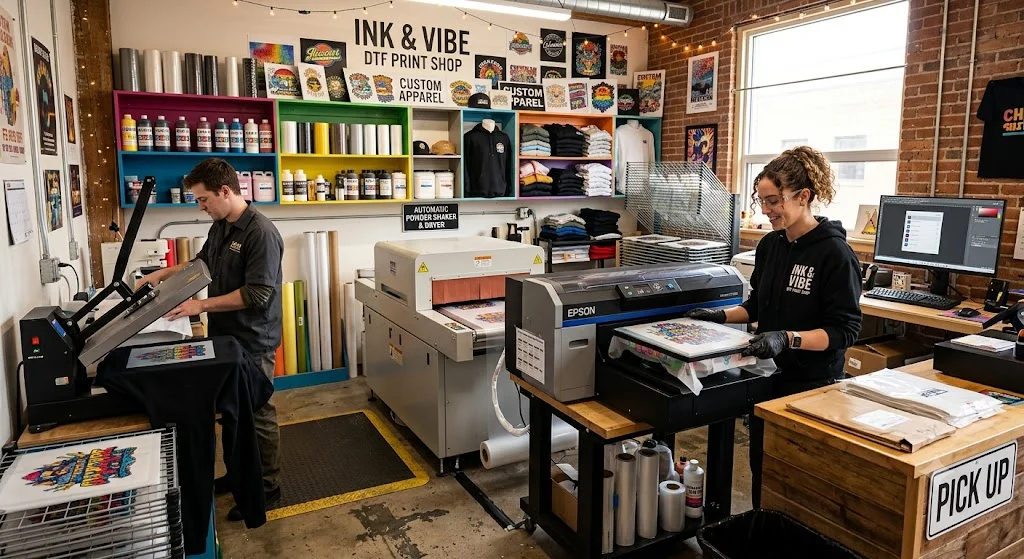
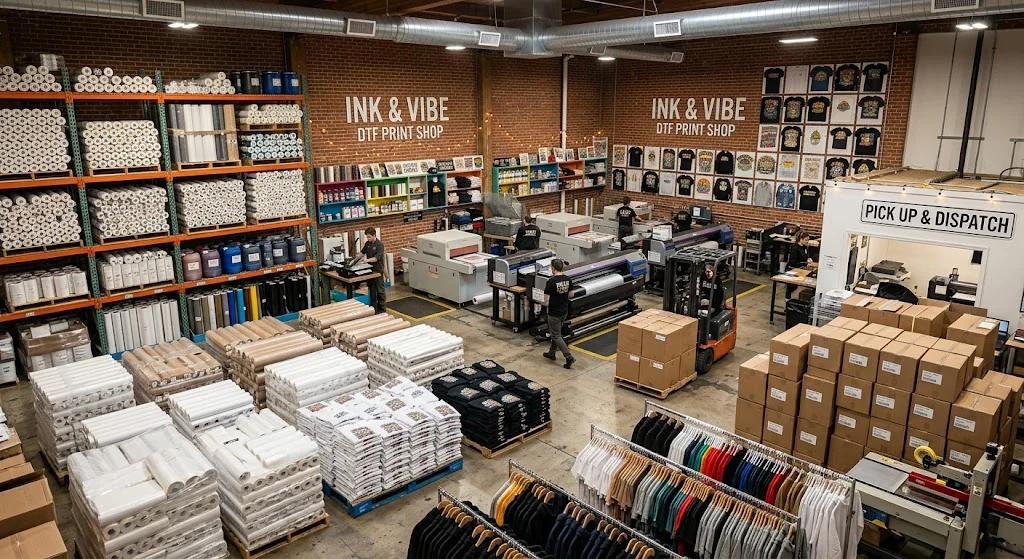
Apex didn’t grow because we built bigger. We grew because the decorators we partnered with grew — and we kept investing in what they needed at each stage. Their journey shaped ours.
Stage 01
Startup Shops
They needed
Guidance, education, no-minimum orders, reliable starter productsWe built
Sample pack program, Basecamp resources, simplified ordering, 5% off first order
Stage 02
Growing Businesses
They needed
We built
Stage 03
Scaling Operations
They needed
We built

Stage 04
Enterprise Decorators
They needed
We built
When decorators grow,
Apex grows with them.
Chapter 06 · What We Learned The Hard Way
Mistakes that changed how we operate.
1
We accepted more rush work than our systems could handle.
What changed: We rebuilt our production scheduling around what we could actually deliver, not what would close the next order. Promised turnarounds are now backed by capacity allocation, not optimism.
2
We launched a product category before we were ready.
What changed: New product categories now require a documented validation cycle before they’re sold to a single customer. We’d rather launch slowly than launch wrong.
3
We scaled hiring before we'd documented our process.
What changed: Every production process is now documented. New operators train against the standard, not a senior teammate’s interpretation of it. Consistency became a system, not a habit.
4
We treated support as a cost, not as part of the product.
What changed: Support is now staffed as production-critical. Named accounts get named contacts. Response times are tracked the same way we track on-time delivery — because they are equally part of the product.
Chapter 07 · What Has Never Changed
The principles that survive every chapter.
From Apex Embroidery to Apex Transfers, four operating principles have remained constant. These aren’t values. They’re commitments — visible in every decision the company has made.
Principle 01
Decorators Come First
In practice: capacity size for existing accounts prioritized
Principle 02
Consistency Is The Product
In practice: documented build specs, every order tier
Principle 03
Relationships Outperform Transactions
Principle 04
Honesty Beats Polish
In practice: absolute radical operational metrics metrics transparency
Chapter 08 · More Than A Supplier
Most transfer suppliers stop here. Apex doesn't.
The difference between a vendor relationship and a production partnership is visible in the workflow itself. Here’s what that looks like in practice.
A Typical Supplier
Order & Done.
- Receives the order
- Produces the transfer
- Ships the order
- Relationship ends here
VS
Apex Transfers
Partnership at every step.
- Supports the decorator before they order
- Reviews artwork & flags issues early
- Produces the transfer to saved spec
- Provides resources, training, and tools
- Supports growth into new stages
- Builds a long-term partnership
Chapter 09 · The People Behind Apex
A team built across two chapters of the same story.
The founders who started Apex. The stewards continuing the legacy. The long-tenured operators who hold the standard daily. Some have been here from the beginning. All of them are why decorators stay.
Brian & Sandy Hill
Founders · Apex Embroidery
Legacy
Built Apex Embroidery on the belief that decorators deserved a real partner — not a transaction. Everything Apex Transfers does today is built on that foundation.
John Meyer
Steward · Apex Transfers
Today
Paisley Capital
Investment Partner
Investment
Marcus Vance
QC Lead
Tenure
Sarah Jenkins
Head of Production
Tenure
Elena Rostova
Customer Success Lead
Tenure
Chapter 10 · Apex Today
The partnership, at scale.
Active Decorator Accounts
Average Decorator Tenure
Reorder Within 60 Days
Capacity Utilization
Headroom built in. We have room for your business.